
What Is “Tài Xỉu MD5”? How It Works and the Most Common Misconceptions About Transparency
In recent years, the digital gambling landscape has evolved rapidly, with new technical concepts being introduced to attract online players. One of the most prominent examples is tài xỉu MD5 a variation of the traditional Vietnamese dice-based betting game that claims to rely on MD5 hashing to ensure fairness. Many platforms advertise this system as transparent, immutable, and impossible to manipulate. Yet, despite these bold claims, confusion still exists among players regarding how tài xỉu MD5 actually works. This article aims to demystify the concept, explain what MD5 is, examine how the game is designed, and clear up the most widespread misconceptions surrounding its fairness.
Understanding Traditional Tài Xỉu
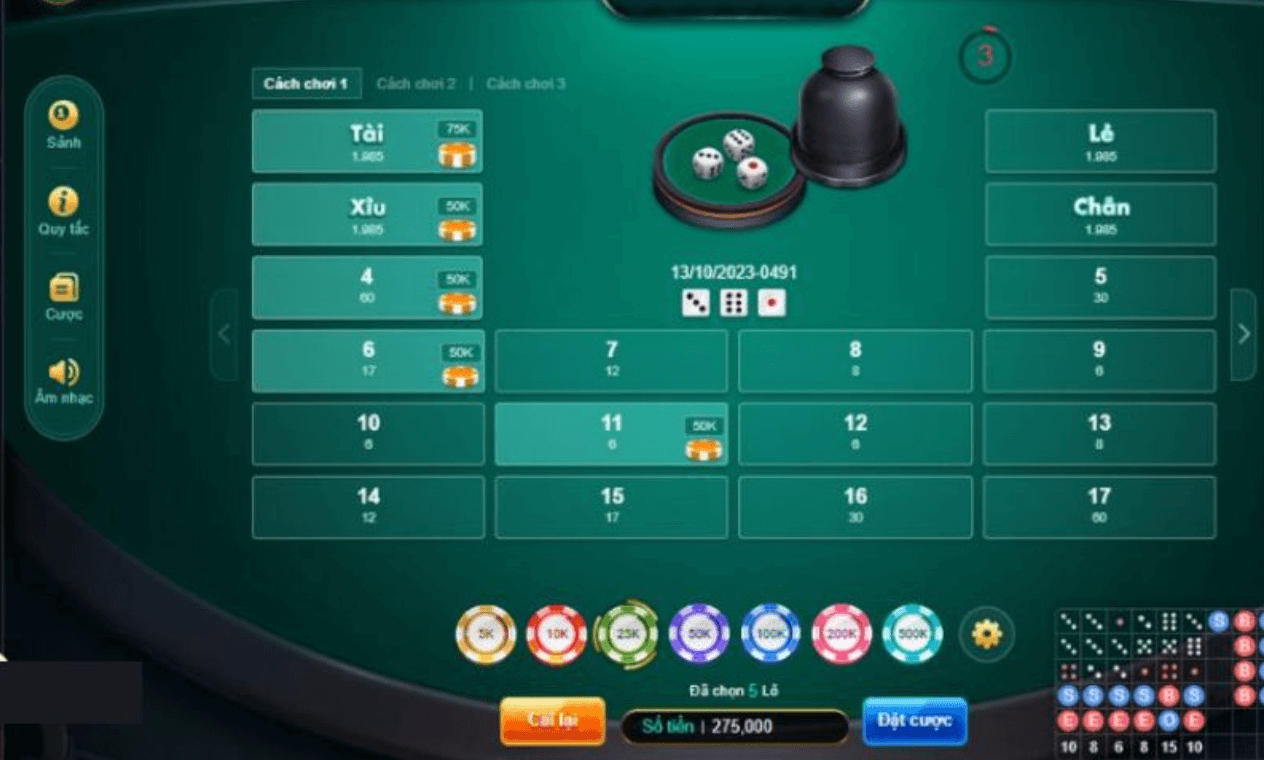
To better understand tài xỉu MD5, we must first look at the traditional version of the game. Tài xỉu, also known internationally as Sic Bo, is a dice betting game that originated in China. It uses three dice, and players wager money based on the total sum after rolling them. The total can be classified as:
- Xỉu (Small): sum from 4 to 10
- Tài (Big): sum from 11 to 17
Additional side bets may involve triples, pairs, or specific number outcomes.
This game has gained popularity globally, especially online, due to its straightforward rules and fast pace.
Introducing MD5
MD5 stands for “Message-Digest Algorithm 5.” It is a cryptographic hash function used to generate a fixed-length sequence of characters (a hash) from any input data. Originally, MD5 was designed for security-related applications—such as verifying file integrity. However, due to discovered vulnerabilities, it is no longer recommended for cryptographic protection. Still, many online platforms use MD5 for non-critical hashing purposes.
A key property of MD5 is that even tiny changes in the input produce a dramatically different hash output. For example, changing a single letter may result in a completely different hash string. This phenomenon is known as the “avalanche effect.”
How MD5 Is Applied in Online Tài Xỉu
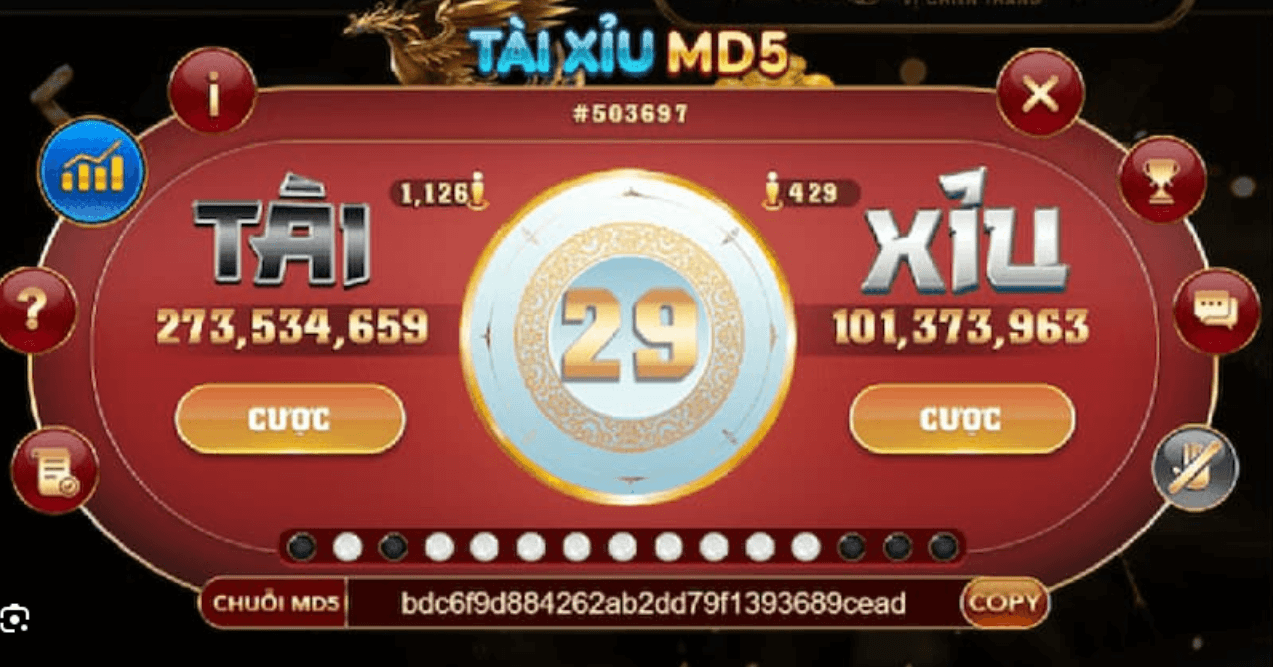
In tài xỉu MD5 platforms, each game round is associated with an MD5 hash. Typically, a server behind the scenes generates a result, then hashes it using MD5. The platform displays this hash before the result is revealed. After the round ends, the server reveals the original data, and users can verify whether the hash corresponds to the revealed number.
The purpose of this process is to create the perception of fairness. Because the hash is published before the outcome, players might assume that the operator cannot change the result afterward without producing a different hash. On paper, this sounds trustworthy. However, there are several details that can create misunderstandings.
The Illusion of Transparency
While MD5 is technically a verifiable tool, its implementation in online gambling depends entirely on the operator. Here are common misconceptions:
1. “The result is predetermined and cannot be changed.”
Technically, yes—the hash corresponds to predetermined input. However, operators might generate multiple possible outcomes and choose the most profitable one before publishing. Since players cannot see the input until later, they are unable to confirm whether it was selected fairly.
2. “MD5 guarantees no manipulation.”
MD5 only guarantees that a specific output matches a specific input. It does not guarantee good faith behavior. A dishonest operator can manipulate the input space, generate seeds until a desirable outcome appears, or adjust rules behind the scenes.
3. “Cryptography equals fairness.”
Players often confuse cryptographic jargon with fairness. MD5 is not a randomness generator; it simply maps data to a digest.
Technical Weaknesses of MD5
MD5 has known vulnerabilities such as collision attacks—meaning two different inputs can produce the same hash. While exploiting these attacks requires expert skill, the existence of such weaknesses has caused MD5 to be deprecated in security-critical fields. Professional gaming platforms usually prefer:
- SHA-256
- SHA-3
- HMAC-based systems
These are more robust cryptographic hash functions.
Why MD5 Became Popular in Gambling
The answer is marketing. Many platforms advertise tài xỉu MD5 as a modern, fair, “provably fair” system. The presence of cryptographic terminology adds a sense of legitimacy, even if the implementation lacks independent auditing. Players may feel more secure simply because the process seems technical.
Fairness vs. Perception
Transparency is not only a matter of cryptographic hashing. True fairness depends on:
- Independent third-party audits
- Publicly verifiable seeds
- Open-source code
- Randomness from trusted sources
- Regulatory oversight
Without these conditions, any hashing system—MD5 included—can be gamed.
Legal and Ethical Concerns
Online gambling laws vary widely across countries. Players should always ensure they follow local regulations. Engaging in unauthorized gambling can result in legal penalties or financial risks. Additionally, platforms offering tài xỉu MD5 rarely disclose licensing or oversight information. In many cases, there is no legal recourse for cheated customers.
How Players Can Verify MD5 Results
To verify an MD5 hash:
- Copy the revealed input.
- Paste it into any MD5 hashing tool (many exist locally or offline).
- Confirm that the hash matches the earlier published hash.
If it matches, the platform did not change that input after publishing. However, this still does not prove the input was chosen fairly.

Advice for Users
If you encounter tài xỉu MD5 platforms:
- Treat “provably fair” claims with skepticism.
- Avoid wagering money based on technical promises you cannot audit.
- Do not mistake cryptography for regulation.
- Understand that most outcomes statistically favor the house.
Responsible behavior is essential. Gambling can be addictive and financially damaging. If you suspect harm, seek help from responsible gaming organizations.
Conclusion
Tài xỉu MD5 at vic88 represents an intriguing fusion of traditional betting games and modern cryptographic hashing. On the surface, MD5 verification appears to offer fairness and transparency. However, a deeper look reveals that this perception depends heavily on trust in the platform’s implementation. MD5 does not guarantee randomness, honesty, or consumer protection. Ultimately, users must approach such systems carefully, understand their limitations, and—most importantly—avoid assuming fairness based solely on technical language.