
Procuring the STM32F103RCT6 32-bit Microcontroller (MCU): Architectural Capabilities and Strategic MCU Supplier Evaluation
Precision motor control and distributed automation frameworks require embedded computing platforms capable of sustained deterministic throughput. System architects frequently deploy the STM32F103RCT6 32-bit Microcontroller (MCU) when industrial machinery demands extensive on-chip storage, rich mixed-signal conversion, and deterministic execution without incurring the power dissipation of application processors.
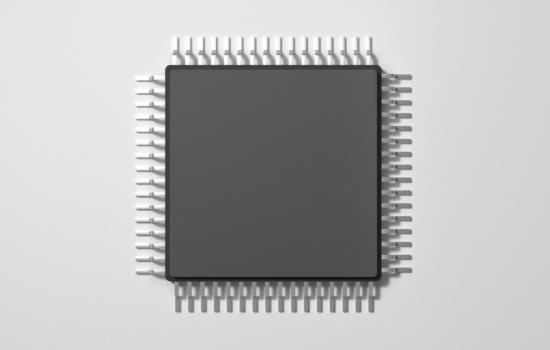
Operating on an Arm Cortex-M3 core at clock rates up to 72 MHz, the architecture generates 1.25 DMIPS per megahertz. Single-cycle multiplication and dedicated hardware division instructions allow control loops to resolve vector coordinates and filter noisy sensor inputs rapidly while maintaining tight deterministic timing constraints.
Core Compute Metrics and On-Chip Memory Distribution
Embedded firmware often exhausts internal storage boundaries during field updates, requiring costly board redesigns or external serial flash chips. Onboard silicon integration resolves this constraint by packing 256 KB of high-density flash memory alongside 48 KB of volatile SRAM directly onto the die, providing sufficient space for real-time operating systems and complex communication stacks.
Autonomous data routing mechanisms prevent central processor saturation during high-throughput serial transactions. Two direct memory access controllers manage 12 channels simultaneously, routing incoming packet streams, DAC requests, and analog conversions between memory banks and active peripherals without stalling the primary core during mission-critical calculations.
Internal oscillator configurations accommodate rigorous electromagnetic compatibility profiles across harsh factory floors. Hardware teams leverage a factory-calibrated 8 MHz RC oscillator or integrate external 4-to-16 MHz crystal resonators, utilizing phase-locked loop multipliers to dynamically adjust core frequency bands according to operational workloads.
Dynamic power-down configurations minimize standby consumption across field instrumentation and remote battery-backed telemetry units. Sleep, stop, and standby modes regulate power consumption effectively, while a dedicated backup battery pin preserves real-time clock functionality and non-volatile registers across supply rails spanning 2.0 V to 3.6 V.
Peripheral Interfacing and Hardware-Level Motion Protection
Analog acquisition fidelity determines the dynamic accuracy of robotic actuators and variable-frequency inverters. Integrating the STM32F103RCT6 32-bit Microcontroller (MCU) provides engineers with triple 12-bit analog-to-digital converters capable of conversion speeds reaching 1 megasample per second across 16 multiplexed analog input channels.
Simultaneous dual-sample-and-hold sequencing captures phase current and DC bus voltage waveforms concurrently. Synchronous analog captures provide field-oriented control algorithms with accurate real-time feedback, enabling fast error compensation, stable torque generation, low torque ripple, and dependable overcurrent protection during rapid motor acceleration profiles.
Advanced motor control timers feature complementary pulse-width modulation channels with programmable dead-time insertion. Hardware-level dead-time logic protects high-voltage MOSFET and IGBT inverter bridges against catastrophic shoot-through currents, while dedicated emergency brake inputs instantly disengage power stages upon detecting thermal faults or analog comparator trips.
Extensive connectivity options include CAN 2.0B Active, full-speed USB, three SPI ports, two I2C buses, and five USARTs. Up to 51 general-purpose I/O lines feature 5 V tolerance, simplifying PCB layouts by interfacing directly with legacy 5 V logic transducers without requiring discrete bi-directional voltage-level shifters.
Operational Benchmarks for Selecting an Authorized Supply Partner
Transitioning an electronic design from prototype validation into high-volume commercial production introduces significant supply chain exposure. Partnering with a competent MCU supplier protects OEMs against unexpected lead-time volatility, component allocation crises, and factory downtime by establishing structured production forecasting and buffer inventory reserves.
Experienced procurement managers evaluate distribution channels through strict criteria encompassing lot traceability, warehouse climate management, and packaging integrity. A dependable MCU supplier coordinates scheduled release agreements that balance manufacturing flow against inventory carrying expenses, preventing line shutdowns while safeguarding production continuity.
Managing multifaceted bills of materials requires supply specialists with access to broad semiconductor product portfolios. Unibetter distributes a wide range of electronic components, maintaining established supply relationships that allow industrial OEMs to satisfy complex BOM requirements even during tight market cycles.
Transparent supply operations rely on prompt quotation turnarounds, accurate factory lead-time notifications, and continuous component lifecycle tracking. Electronics manufacturing services providers maintain predictable build schedules when distribution specialists deliver clear delivery schedules, buffer stock monitoring, and early product change notices before silicon revisions take effect.
Traceability Controls and Counterfeit Risk Mitigation
Counterfeit semiconductors introduce catastrophic operational liabilities into critical industrial, medical, and energy infrastructure. Fraudulent brokers often distribute remarked, refurbished, or cloned microcontrollers that fail under thermal cycling, creating hidden field defects, expensive warranty claims, and severe reputational damage for electronic manufacturers.
Securing authentic hardware requires uncompromising distribution standards. Unibetter offers franchised sourcing support and incoming component inspection services. Incoming lots undergo rigorous physical, package, and marking verifications to ensure flawless surface-mount assembly performance.
Supporting customers to locate needed electronic components and acquire them at lower costs serves as a foundational operational asset during volatile procurement conditions. Disciplined procurement networks locate authentic inventory during global supply imbalances, enabling commercial manufacturers to bypass inflated spot-market markups and maintain target profit margins.
Rigorous incoming quality procedures combine detailed packaging inspection with complete manufacturer documentation reviews. Experienced sourcing specialists verify original factory labels, moisture barrier packaging, and date codes, confirming that all components adhere to strict moisture sensitivity levels and electrostatic discharge handling protocols.
Securing Sustained Production Runs and Lifecycle Continuity
Long-term commercial equipment viability depends on selecting mature silicon architectures backed by predictable supply channels. Integrating microcontrollers with expansive peripheral options and generous memory allocations provides engineering teams with the necessary firmware flexibility to deploy functional upgrades throughout multi-year equipment lifecycles without initiating expensive printed circuit board redesigns.
Partnering with Unibetter bridges technical design parameters with resilient international procurement channels. Procuring authentic components through verified distribution pathways ensures that automated machinery, power infrastructure, and precision motion controls maintain steady volume production, predictable material costs, and uncompromised operating reliability.