
Planning Tips For Seamless Event AV Services
Organizing an event is interesting and complicated. Every minute detail of the arrangement, from the choice of venue to the final guest leaving, makes a difference.
One important aspect is how audiovisual (AV) elements are processed. When lighting, sound, video, and media collaborate harmoniously, attendees remain fully focused because they are completely immersed in the experience.
With proper planning of your technical setup, you can significantly minimize hiccups and increase guest satisfaction. The article provides practical advice for anyone who wants to create the best event experiences, drawing on expertise in full-scale production, media production, and immersive technologies.
When hosting a conference, gala, or trade-show booth, an effective AV strategy ensures your message stays clear and consistent.
1. Communicating Your Needs Clearly

The first step is to determine what you want out of your AV services. Does it include hosting a presentation with extensive production, breakout rooms with less complex arrangements, or a hybrid event that provides for both in-person and remote participants?
Knowledge of the format will help you recognize the necessary elements of audio, video, lighting, and media. Indicatively, event AV services offer projection mapping, LED video walls, interactive kiosks, and innovative media production under a single roof.
When you have defined your objectives, like what you want the attendees to experience, what you want to share, and the role of technology in achieving them, it becomes a strong basis for choosing equipment, venue layout, and technical staff.
The absence of this clarity will mean that AV is more of a collection of loosely connected parts than an experience.
2. Have An Early Meeting With Your AV Partner
Once your needs are established, be early in discussing them with your AV partner and the venue planner. A vendor is a reliable partner who will work with you on venue sourcing, space planning, and show flow —the foundation of an event’s technical direction.
Early involvement allows you to overcome venue constraints, rigging, power, and network infrastructure before event week. In the case of hybrid or tech-focused events, network connectivity and flawless IT integration are obligatory.
The current AV systems tend to be IT-based and not independent systems. Discussing these factors at the beginning will avoid last-minute problems and will give your team time to test, rehearse, and polish every detail.
3. Plot The Physical Space and Technology Process
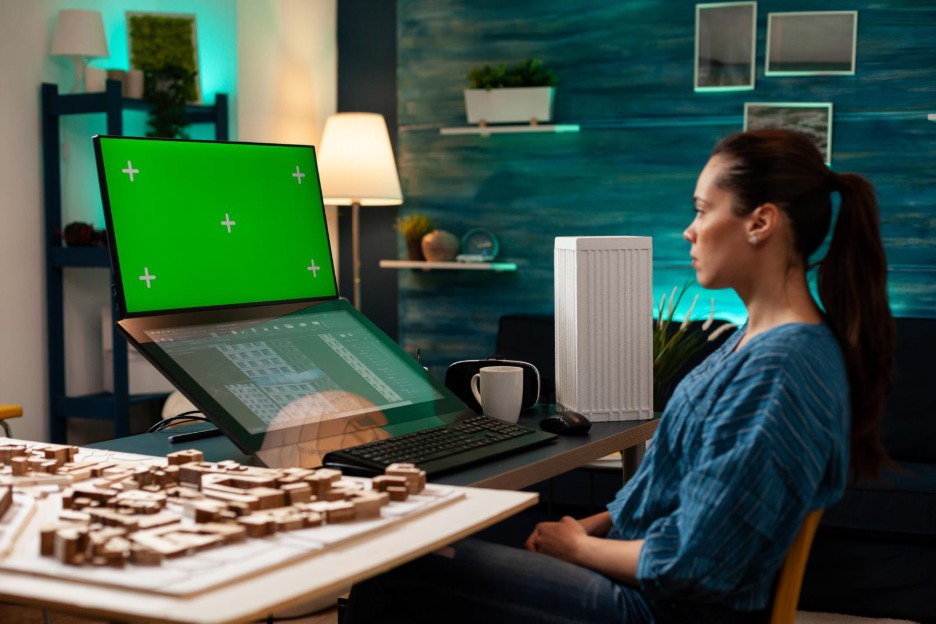
The ensuing puzzle components are physical layout and workflow. Check sight lines, screen positioning, speaker location, lighting design, and movement. An effective AV firm will also offer CAD drawings, previews of the rendering, and visualization of stage concepts so you can anticipate what attendees will see and how they will move.
This step is like designing the event’s overhead blueprint—determining how all elements above and around the audience will come together seamlessly. At the same time, specify the technical pipeline: content insertion, video routing, audio distribution, lighting cues, and show control.
Workflow mapping simplifies role assignment, rehearsals, and contingency planning in the event of equipment malfunctions or network glitches.
4. Create The Media and Content with Purpose
Although infrastructure is crucial, do not overlook media, content, and storytelling. The attendees will not just merely consume content but will also be involved in it. What you see and what you hear should align with what you are trying to convey.
A full-service AV and media team would be helpful in video production, motion graphics, presentation design, and interactive installations. When you synchronize your content plan with your technical plan, ensure the media supplements contribute to the event rather than appearing in the background.
Develop a content delivery schedule, provide instructions for transitions (audio, lighting, video), and practice how the presenters will integrate with the media. This concentration will ensure that the audience’s attention remains as you desire and that your message is delivered clearly.
5. Rehearse, Communicate, And Prepare for Contingency
Success should never be left to chance. Rehearsals, effective communication, and contingency planning make all the difference between smooth events and chaotic events.
The AV team is expected to run a trial of the flow for your show, for example, every piece of content, cue, and technical aspect. Trustworthy providers organize teams of vendors, are responsible for documenting roles and communication channels, and ensure vendor teams are aligned.
Redundancy should be ensured through power backup, backup equipment, alternative network routes, and fail-safe measures for essential processes, that is, switching to on-site streaming should the need arise.
Communicate freely with your team, presenters, and technical crew to ensure that all know what to expect and can respond speedily in the event of a mishap. A well-rehearsed show will be much sturdier and run smoothly.
Final Thoughts
To organize a continuous flow of AV services, it is essential to carefully plan all its steps, like identification of requirements and collaboration with professionals, layout, content, rehearsals, and contingency plans.
When you invest time at the beginning, you reduce stress at the event, provide a high-quality experience, and allow your message to shine through. When the audio is crisp, the video is vivid, the lighting is deliberate, and the content is engaging, your audience is no longer concerned with the mechanics but with the message.
The smartest move is to get on board with the entire production process and provide your event with the technical base it deserves.