
How to Design a Feed Mill for Antibiotic-Free Production Compliance
Producing feed without antibiotics requires instead of changing the formula. Hygiene controls, ingredient segregation, validated cleaning, and precise additive handling all influence whether a facility can maintain consistent production conditions. Modern animal feed machine systems need to fit into a broader compliance strategy. For operations evaluating these requirements, FAMSUN provides a useful reference point because its equipment solutions are developed around food safety, process control, and adaptable production needs.
Establishing Hygiene Zones Across the Mill
Facility design should begin with the movement of ingredients, personnel, finished feed, and waste. Raw-material areas can carry dust and microbial loads into cleaner sections if traffic patterns overlap. Physical separation, controlled access, and clearly defined production zones reduce unnecessary cross-contact between materials.
Equipment placement also affects sanitation. Conveyors, mixers, bins, pelletizing systems, and transfer points should remain accessible for inspection and cleaning. Dead corners, residue traps, and difficult-to-reach surfaces can create persistent hygiene challenges, particularly when different formulas move through the same production line.
Material selection deserves similar attention. Smooth contact surfaces, suitable seals, and accessible inspection points make routine sanitation more practical. Such considerations become especially important when an animal feed machine handles multiple formulations under strict ingredient-control requirements.
Upgrading Equipment for Antibiotic-Free Processing
Antibiotic-free production places greater emphasis on process discipline because contamination can affect product status even when antibiotics are not intentionally added. Equipment configuration should support controlled dosing, predictable material flow, and effective residue removal.
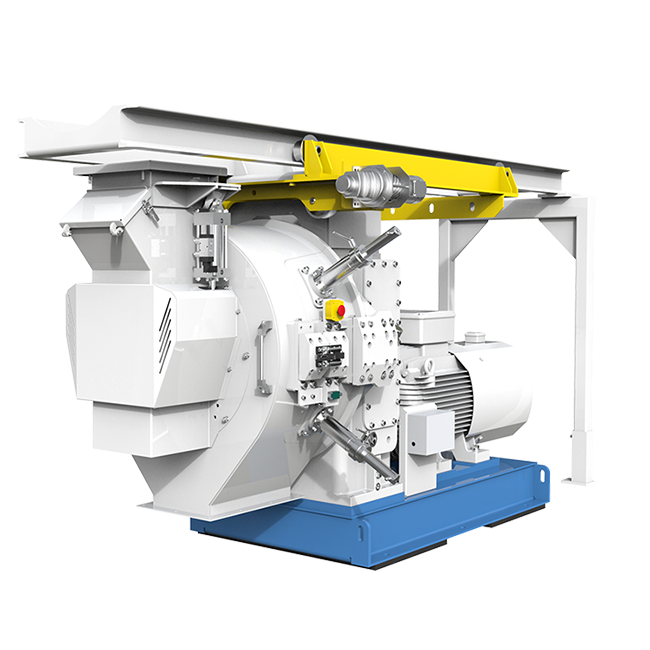
The KX Series Aquafeed Pellet Mill illustrates how configuration flexibility can support different production requirements. Designed for fish, shrimp, and crab formulations, the system can be configured according to process needs. Although aquafeed represents a specific application, the underlying principle is relevant to broader feed-mill design: equipment characteristics should match the formulation, throughput, and hygiene requirements rather than being selected solely by capacity.
Within a modern production line, the feed machine should also work with upstream and downstream systems as one controlled process. Ingredient weighing, mixing, conditioning, pelleting, cooling, and conveying each create opportunities for carryover, so hygiene planning cannot focus on one machine in isolation.
Validating CIP and Cleaning Procedures
Cleaning-in-place, or CIP, matters most where equipment interiors are difficult to access manually. The process normally involves defined sequences for water, cleaning agents, contact time, temperature, and rinsing. Validation then determines whether the selected procedure consistently reaches the required cleanliness level.
Verification should rely on measurable indicators rather than visual inspection alone. Swab tests, rinse-water analysis, residue checks, and microbial monitoring can provide evidence about whether cleaning procedures are functioning as intended. Results should also be documented so that recurring problem areas can be identified.
Production scheduling provides another layer of control. Running compatible formulas sequentially may reduce cleaning frequency, while higher-risk transitions can trigger additional sanitation procedures. Such planning helps keep the animal feed machine productive without treating hygiene as an afterthought.
Managing Additives With Greater Precision
Antibiotic-free formulations often depend on precise use of vitamins, minerals, enzymes, amino acids, organic acids, and other functional additives. Small dosing errors can affect nutritional specifications, while poorly controlled transfer routes may introduce unwanted carryover.
Dedicated dosing systems can help separate sensitive ingredients from bulk materials. Closed conveying, calibrated scales, automated recipes, and barcode identification provide additional checkpoints throughout the process. Digital records are particularly useful because each batch can be connected with its ingredient quantities and production parameters.
Process compatibility matters as well. Some additives are sensitive to heat, moisture, or prolonged exposure during conditioning and pelleting. Selecting the appropriate feed machine configuration requires consideration of both hygiene and ingredient characteristics.
Building Compliance Into Production Management
Documentation connects physical controls with certification requirements. Standard operating procedures should define equipment cleaning, additive handling, formula changes, inspection frequency, and corrective actions. Training records can demonstrate that operators understand these procedures rather than merely having access to them.
Traceability adds another layer of accountability. Batch identifiers can connect incoming materials with production records and finished-feed destinations. If an irregularity appears, this information helps personnel investigate the affected production window and identify relevant process data.
Maintenance planning should receive equal attention. Worn seals, damaged surfaces, leaking lubrication systems, or poorly adjusted dosing components can create risks unrelated to the feed formula itself. Preventive inspections form part of the overall compliance framework rather than serving only an equipment-reliability purpose.
Preparing the Mill for Continuous Compliance
Compliance works best when facility design, equipment selection, sanitation, and production management reinforce one another. Rather than treating antibiotic-free certification as a final inspection target, mill operators can incorporate its requirements into decisions made during layout planning and equipment specification.
Clear material routes, validated cleaning methods, controlled additive dosing, and traceable batch records provide a practical foundation. Equipment flexibility can then support changes in formulation without forcing the entire process architecture to change.
Conclusion
Antibiotic-free production depends on disciplined control across the entire manufacturing chain. Hygiene zoning addresses physical contamination routes, CIP validation provides measurable sanitation evidence, while accurate additive management protects formulation integrity. Together, these measures turn compliance into an operational system rather than a single certification exercise. FAMSUN illustrates how equipment choice, hygiene planning, and production control come together in modern feed manufacturing, so it can serve as one reference for projects at this stage.