
Comparing Islanding Protection Response in Solar VFDs and Solar Pump Inverters for Reliable Energy Applications
The increasing adoption of solar-powered pumping systems has brought greater attention to safety, reliability, and grid interaction management. Among the key concerns is islanding protection, which prevents distributed energy systems from continuing operation when the main power grid is unavailable. Understanding how different inverter technologies respond to islanding conditions helps industrial users select suitable equipment for agricultural irrigation, water management, and renewable energy projects.
As a professional solar pump inverter manufacturer, FRECON focuses on developing inverter solutions that support efficient motor operation and renewable energy utilization. Its products are designed for industrial automation, energy management, and sustainable energy applications, helping users achieve stable performance in demanding operating environments.
Understanding Islanding Protection in Solar-Powered Systems
Islanding occurs when a distributed energy source continues supplying power to a local load after the external electrical grid has been disconnected. Although the system may appear to operate normally, an uncontrolled island can create safety risks for maintenance personnel, damage connected equipment, and affect power quality.
To address these challenges, modern inverter systems include islanding detection and protection functions. When abnormal grid conditions are detected, the inverter must respond quickly by stopping power output or transitioning into an appropriate operating mode. The response speed depends on system design, detection methods, control algorithms, and application requirements.
For solar pumping systems, islanding protection has particular importance because pumps often operate in remote locations where monitoring and maintenance access may be limited. A reliable solar pump inverter needs to balance energy conversion efficiency with stable and safe operation.
How Solar VFD and Solar Pump Inverter Systems Handle Protection
A solar VFD, or variable frequency drive designed for solar applications, primarily focuses on controlling motor speed by converting variable solar power into suitable electrical output. These systems are commonly used where motor regulation, energy optimization, and flexible operation are required.
Solar VFD technology can include protection functions such as overvoltage protection, undervoltage protection, and fault detection. Depending on the system configuration, it may also include grid monitoring capabilities for applications connected to utility power. The response rate of islanding protection depends on how quickly the drive detects abnormal conditions and activates protective measures.
A dedicated solar pump inverter is developed specifically for photovoltaic-powered pumping applications. Compared with general-purpose drives, it typically integrates solar input management, pump control functions, and environmental adaptability. These features allow the system to manage changing solar conditions while maintaining stable water pumping performance.
Factors Affecting Islanding Protection Response Rates
The response time of islanding protection is influenced by several technical factors rather than being determined solely by the inverter category. Detection algorithms play an important role because the system must identify grid abnormalities accurately while avoiding unnecessary shutdowns caused by temporary fluctuations.
Advanced control algorithms can improve detection accuracy by continuously analyzing voltage, frequency, and power changes. However, faster response must be balanced with operational stability. Excessively sensitive detection may interrupt normal operation, while slower detection may reduce system safety.
Hardware design also affects performance. Processing capability, sensor accuracy, and communication functions determine how quickly an inverter can evaluate conditions and execute protective actions. For industrial users, selecting equipment with suitable protection features is essential for maintaining reliable long-term operation.
FRECON Solar Pump Inverter Solutions for Demanding Applications
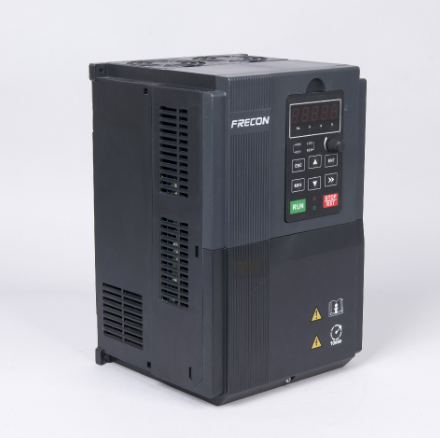
FRECON develops solar energy solutions that combine motor control capability with renewable energy management requirements. Its PV500 Series Solar Pump Inverter is designed for demanding industrial applications, supporting efficient operation across different pumping environments.
The PV500 series hybrid solar pump inverter supports both asynchronous motors and permanent magnet synchronous motors. This compatibility allows users to select suitable motor configurations while maintaining precise speed and torque control. Advanced motor control algorithms help improve operating stability under changing load conditions.
The series is also designed for harsh working environments where equipment reliability is critical. Its wide adaptability supports applications involving heavy-duty conditions, including hoists, cranes, and textile machinery. For solar pumping projects, these capabilities help ensure consistent performance when operating conditions fluctuate.
As a solar pump inverter manufacturer, FRECON integrates inverter technology with application-focused engineering. Its solutions are developed to support energy efficiency, operational reliability, and flexible system design for industries requiring dependable solar-powered equipment.
Choosing Between Solar VFD and Solar Pump Inverter Technologies
The choice between a solar VFD and a solar pump inverter depends on the project’s operational requirements. Solar VFD systems may be suitable for applications requiring broad motor control functions and integration with existing automation systems. They provide flexible speed adjustment and can support different industrial processes.
However, solar pumping projects often require additional functions related to photovoltaic input management, water flow control, and remote operation. In these cases, a specialized solar pump inverter may provide a more application-oriented approach by combining solar conversion and pump control in one system.
Project designers should evaluate factors including motor type, power source, environmental conditions, protection requirements, and maintenance expectations. A comprehensive assessment helps ensure that the selected inverter technology matches both current needs and future expansion plans.
Improving Solar System Reliability Through Advanced Inverter Design
The development of inverter technology continues to improve the safety and efficiency of renewable energy systems. Better detection methods, stronger control algorithms, and improved motor management are helping industrial users build more reliable solar applications.
For companies planning solar pumping projects, islanding protection is only one part of overall system performance. Equipment durability, motor compatibility, energy efficiency, and application support are equally important considerations.
FRECON provides solar inverter solutions that combine advanced motor control with renewable energy applications. Through products such as the PV500 Series, the company supports customers seeking reliable solar pump inverter systems for industrial and agricultural environments. By integrating protection features with efficient operation, FRECON helps users develop more stable solar-powered pumping solutions.