The Science Behind Almost Winning: How Near Misses Keep You Playing
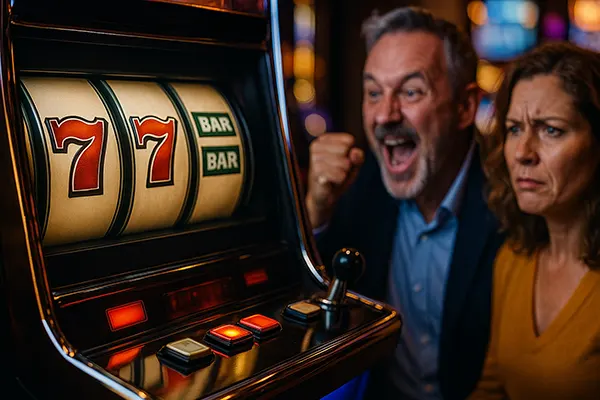
Two bonus symbols appeared. Needed three. The third reel stopped one position away from the scatter. So close.
That near-miss triggered another 50 spins chasing the feature. Then another near-miss. Another 50 spins. Six hours later, I’d burned through my entire session budget without hitting the bonus I’d come so close to multiple times.
Near-misses don’t just happen randomly. They’re programmed deliberately. Here’s the psychology that keeps you playing.
Platform game variety affects how frequently near-misses appear across different slot types. SlotLair operates with thousands of titles from 30+ providers including Play’n GO and Nolimit City, offering €10,000 welcome packages with 300 free spins across three deposits – their extensive library includes both high and low near-miss frequency slots.
What Qualifies as a Near-Miss
Two scatter symbols when you need three. Jackpot symbols on reels one and two, blank on reel three. Bonus trigger one position away from payline.
Your brain interprets these as “almost won” even though mathematically they’re identical to any other losing spin. The outcome was never close. But visually, it appears you nearly succeeded.
The Dopamine Trick
Winning releases dopamine. Expected reward, brain gets satisfaction. But near-misses also release dopamine. Your brain anticipates winning based on visual proximity, starts the reward process, then doesn’t complete it.
That incomplete reward cycle creates frustration. Your brain wants completion. Solution? Keep playing until you actually win and complete the cycle.
I’ve felt this physically. Near-miss happens, heart rate increases, lean forward in chair, immediately press spin again. The near-miss activated me more than actual small wins did.
Why Near-Misses Feel Different Than Regular Losses
Lose with random symbols? Disappointment but acceptance. Lose with near-miss? Frustration and motivation to continue.
The difference is perception of control. Near-miss suggests you’re “getting closer” to winning. Creates illusion that another spin might convert the near-miss into actual win.
Reality: next spin has identical odds as the previous 200 spins. But near-misses convince you otherwise.
Programmed Frequency
Slot developers intentionally program near-miss frequency. Too many near-misses feels manipulative. Too few removes their motivational effect.
Modern slots balance near-miss rates to maximize engagement without triggering player suspicion. The “optimal frustration point” where you’re annoyed but still motivated.
I started noticing patterns. Certain slots delivered near-misses every 15-20 spins. Others every 40-50 spins. The frequency wasn’t accidental. Testing these patterns without initial investment helps identify which games use near-misses most aggressively – promotions offering 50 free spins no deposit provide risk-free observation of near-miss frequencies before committing real money to slots that might frustrate more than entertain.
The Two-Symbol Trap
Getting two scatter symbols feels more significant than one. Your brain weights it as “closer” to three than one symbol was to three.
Mathematically false. Each reel operates independently. Two scatters on reels one and two doesn’t increase probability of scatter on reel three. But visually, it feels like progress.
This trap cost me hours of play time. Saw two scatters, convinced myself the third was “due.” Kept spinning. Fell for it repeatedly.
Breaking the Near-Miss Cycle
I now recognize near-misses as losing spins, not “close calls.” When two scatters appear, I consciously tell myself “lost spin, same as any other.”
Also set spin limits before starting. Hit 100 spins without bonus? Stop regardless of near-misses. This prevents the “just one more spin” trap near-misses create.
Understanding near-miss psychology doesn’t eliminate their effect entirely. But awareness reduces their power significantly. They’re designed to exploit hope. Recognizing that lets you resist the manipulation.