Why No One Can Focus Anymore in 2025 — And How Micro-Entertainment Took Over
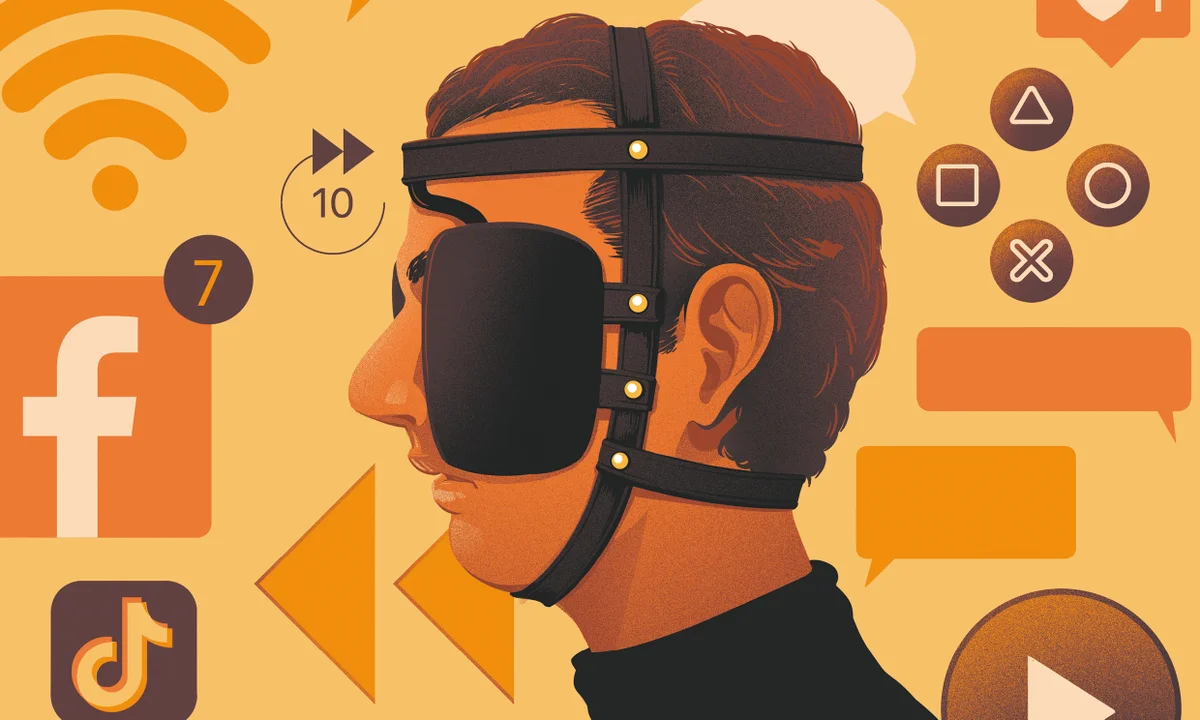
The year 2025 revealed a truth many had sensed but never quite defined: human focus is collapsing. The modern mind struggles to hold a single thought without interruption. Notifications carve through concentration with surgical precision, news cycles bombard with relentless urgency, and workplace messaging turns every day into a sequence of micro-demands. Digital acceleration has outpaced cognitive evolution, leaving concentration less like a natural state and more like an endangered psychological resource. The question “why no one can focus anymore” has shifted from a personal frustration to a universal condition shaped by digital overload, shrinking attention spans, dopamine-driven platforms and the constant pressure of immediacy. And into this fragmented landscape, micro-entertainment has quietly taken over—becoming the only format truly aligned with how the 2025 brain now works.
The human brain wasn’t designed for continuous switching. Under the pressure of constant digital stimuli, it defaults to short, low-effort interactions that feel safe and manageable. Cognitive researchers describe this as the dopamine economy: a system where tiny rewards repeatedly reinforce the pull of immediacy. Each alert, swipe and instant reaction becomes a training loop, making prolonged concentration feel increasingly unnatural. This isn’t a moral failure or a lack of discipline; it is a predictable response to overstimulation. In a digital environment built for frictionless engagement, sustained focus simply cannot compete with thousands of micro-events designed for instant satisfaction.
This is why micro-entertainment has become the dominant form of digital behavior. It is not merely distraction—it is adaptation. Short videos, instant interactions, quick games, micro-experiences that require almost no cognitive weight: these formats offer controlled stimulation while giving the mind a moment to reset. A one-minute digital break can restore clarity more effectively than traditional rest, precisely because it fits the compressed, high-frequency rhythm of modern life. In the 2025 focus crisis, micro-entertainment became a coping mechanism that fits naturally into commutes, task transitions, pockets of emotional stress and the countless brief intervals that define a typical day.
Long-form content, meanwhile, demands emotional and cognitive endurance that fewer people possess. Articles remain half-read, films get paused repeatedly, podcasts drift into background noise, educational videos lose viewers within seconds. Users don’t reject depth; they reject exhaustion. They gravitate toward formats engineered for minimal friction—fast, clear, rewarding and cognitively light. This shift explains the rise of instant-engagement platforms designed around simplicity and rapid emotional feedback. Among them, onlyspins.org represents this new architecture of interaction: a system tuned to the fragmented cognitive bandwidth of modern users, offering accessibility and clarity without demanding outdated levels of sustained focus.
Digital behavior analytics highlight the scale of this shift. Global searches for phrases like “attention span shrinking,” “digital overload symptoms,” “dopamine-driven platforms,” “instant engagement apps” and “why can’t I focus anymore” grew dramatically throughout 2025. Analysts now classify the attention collapse as a structural transformation rather than a temporary phenomenon. As digital density intensifies, the ecosystem of micro-entertainment becomes digital infrastructure—the foundation on which people manage their time, emotions and interactions.
This new reality reshapes everyday habits. Traditional relaxation no longer works because it requires time people no longer have. A long break feels unrealistic; a quick reset feels natural. A short digital escape lowers stress, recalibrates emotional tone and restores cognitive sharpness. These micro-pauses act like psychological ventilators, helping the mind survive in an environment thickened by pressure and constant notifications. Instead of breaking attention cycles, micro-entertainment sustains them, allowing users to re-engage with tasks after brief intervals of controlled relief.
Human focus no longer functions as a continuous line. It emerges in cycles—a burst of concentration followed by micro-recovery. Micro-entertainment supports this rhythm, offering emotional and cognitive stabilization without overwhelming the user. It doesn’t weaken the mind; it preserves its ability to function within conditions that exceed biological limits.
As digital intensity continues to climb, platforms that understand the psychology of fragmented attention will define the next era of digital engagement. Systems providing immediate clarity, emotional neutrality and minimal cognitive friction consistently outperform slow, demanding interfaces. Users avoid overwhelming environments and choose designs built for speed, simplicity and intuitive flow. This is the new reality of digital behavior: attention is currency, and platforms that respect it thrive.
Human attention isn’t disappearing. It is evolving under pressure, reshaping itself to survive inside a digital climate that grows louder and faster every year. The 2025 focus crisis isn’t a sign of weakness; it’s a structural reaction to unprecedented cognitive demands. Micro-entertainment isn’t the enemy—it is the stabilizing architecture that helps the modern mind endure the velocity of contemporary life. The world will continue accelerating, but small, instantly accessible moments of ease may be the final anchors keeping the modern mind intact.